Lore: Version Control Built for Game-Scale Repositories
Most version control conversations are written from the point of view of source code. That makes sense for many software teams, but it misses the shape of a large game studio or media production repository.
A game repository is not just code. It is source files, engine modules, shaders, massive binary assets, textures, audio, cinematic data, generated files, and internal tools. Many of those files do not diff nicely. Some are too large to move casually. Some are needed by artists who do not want to become Git specialists. Some are touched by build farms and automation more often than by humans.
Lore is Epic Games’ attempt to treat that world as the normal case instead of the edge case. It is an open source version control system designed for enormous repositories, with an explicit focus on games and entertainment pipelines. The interesting part is not simply that it wants to be faster than Git. The interesting part is that it accepts a different product brief: make repository scale, binary content, partial checkouts, and non-programmer workflows feel native.
That changes the design from the storage layer upward.
The Problem Lore Is Aiming At
Git is excellent at a lot of things. It is portable, distributed, scriptable, familiar, and deeply embedded in developer infrastructure. It also assumes a working model that can get painful when the repository is huge and the files are not mostly text.
Large creative repositories tend to run into the same cluster of problems:
- Cloning the whole repository is expensive.
- Checking out every file is unnecessary for most users.
- Binary assets make history heavy and diffs less useful.
- File locking matters because two artists cannot merge the same opaque asset as easily as two engineers can merge a TypeScript file.
- Build and content pipelines need reliable object identity, caching, and remote execution.
- Teams still want Git-like concepts because every tool in the software world already speaks Git.
Git LFS, sparse checkout, partial clone, and monorepo tooling all help. But they still feel like layers added around a core model that was not built primarily for this workflow. Lore’s pitch is that the core model should directly support the way these teams work.
The docs describe Lore as a version control system for massive repositories where users can work with a small subset of the tree while the system stores and transfers content efficiently. That sounds modest until you imagine a studio repository with millions of files, years of binary history, and many roles that only need a sliver of it on a given day.
Sparse Workspaces As A First-Class Workflow
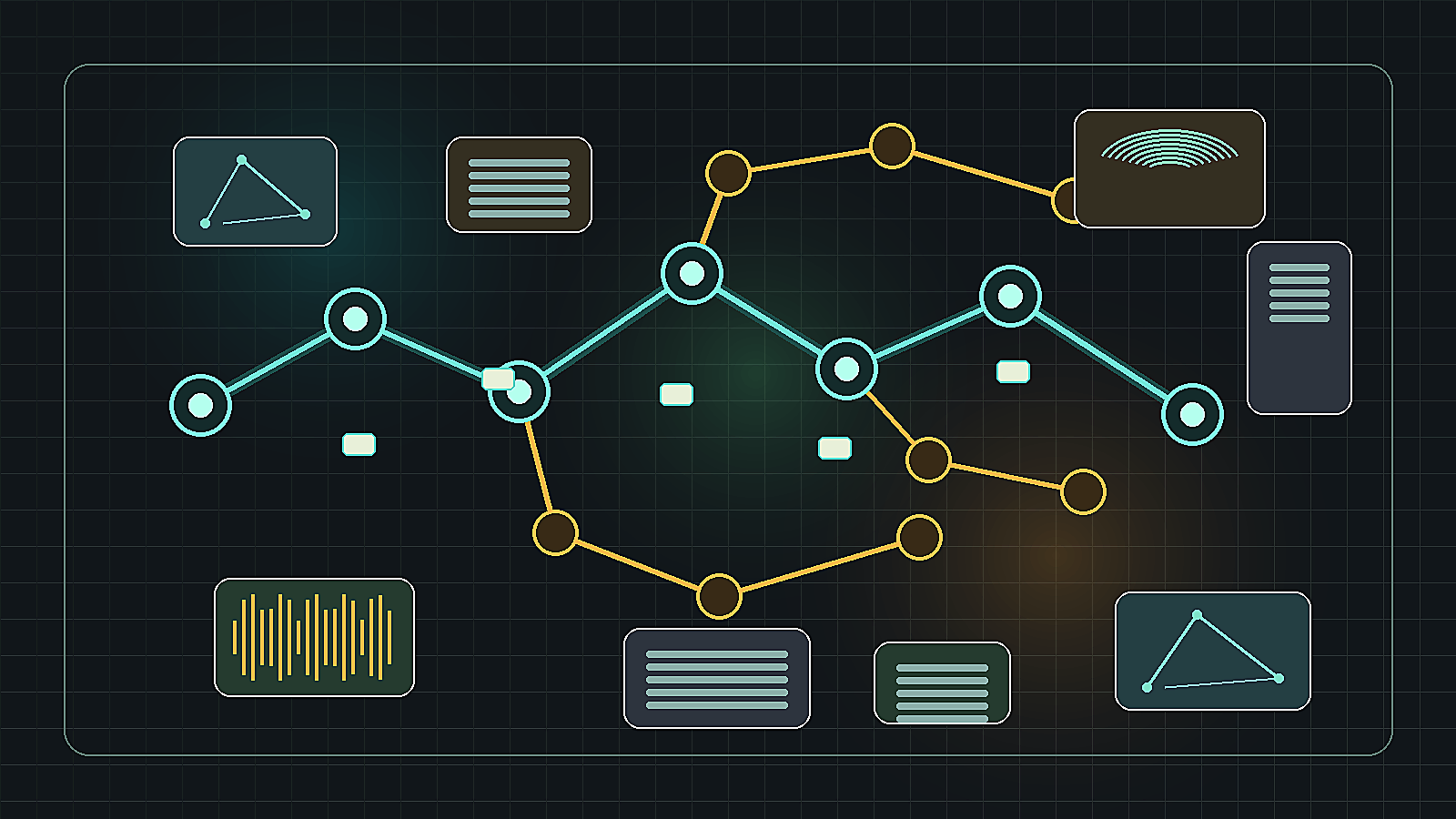
The most practical idea in Lore is that a local workspace should not have to contain the whole repository. A gameplay engineer may need code, scripts, and a few test assets. A lighting artist may need a specific environment, not every platform build artifact and unrelated character source file. A CI job may need one deterministic slice of the graph.
Lore makes this partial view central. Instead of assuming the user has a full checkout and then asking them to narrow it, the system is designed around sparse local workspaces from the start. The repository can be much larger than the files currently materialized on disk.
That matters because it changes the day-to-day cost model. The user does not pay for every file just because the organization stores every file in one logical repository. The local machine becomes a working set, not a mandatory mirror.
This is especially important for game development because repository boundaries are often organizational compromises. Splitting everything into many repositories can make asset dependencies, engine integration, and build reproducibility harder. Keeping everything together can make every local operation painful. Lore is trying to keep the shared project graph without forcing every user to carry the full physical weight of it.
Content-Addressed Storage Is The Spine
Lore’s system design leans heavily on content-addressed storage. In simple terms, content is identified by what it is, not just where someone put it. If two paths or revisions refer to the same bytes, the storage layer can recognize that sameness. If a build or transfer asks for an object, the object can be verified by its identity.
That is not a new idea. Git itself is content-addressed. Modern build systems and artifact caches use similar principles. What is notable is how directly Lore connects that idea to the needs of creative repositories.
For large binary-heavy projects, content identity becomes the basis for deduplication, caching, remote transfer, and trust. A texture, sound file, or generated asset does not need to be understood as text for the system to know exactly which object it is. The storage layer can move and reuse objects without pretending every file is mergeable source code.
This also makes Lore feel adjacent to the world of build acceleration and remote execution. Once content identity is explicit and cheap to check, a system can ask better questions: which objects are already present, which ones must be fetched, which outputs are reusable, and which workspace view is actually needed for this operation?
Git Compatibility Is A Product Decision, Not A Footnote
Lore is not trying to win by telling teams to abandon every existing habit at once. The project emphasizes Git compatibility and familiar concepts. That is a practical choice.
Version control systems rarely fail because the storage engine is impossible to write. They fail because the surrounding ecosystem is enormous. Editors, CI systems, code review tools, deployment scripts, hooks, bots, security scanners, documentation, and developer muscle memory all assume certain workflows.
If Lore can interoperate with Git concepts where it matters, it gets a much easier adoption path. Teams can evaluate it as an infrastructure layer for scale problems instead of as a full cultural reset.
That said, compatibility cuts both ways. If a tool behaves too much like Git, users expect every Git feature and edge case. If it behaves differently, users need to understand where the model changed. Lore will need crisp boundaries here: which Git expectations are intentionally preserved, which are approximated, and which are replaced because game-scale work needs different tradeoffs.
Binary Assets Need Different Collaboration Rules
Software engineers often talk about merging as if it is the default answer to collaboration. That assumption breaks down quickly for binary creative assets.
Two programmers can edit different parts of a source file and resolve a conflict. Two artists editing the same binary scene file may not have a meaningful line-based merge. A lock, reservation, or workflow-level coordination step can be the least bad option.
This is one reason game studios historically used systems such as Perforce. The appeal is not nostalgia. It is that Perforce understood large files, partial sync, and file locking as normal enterprise production needs.
Lore enters that same problem space with a modern architecture and open source posture. The important question is whether it can preserve the parts teams relied on in older centralized systems while giving developers the flexibility and automation surface they expect from newer tooling.
A good game-oriented VCS cannot simply be “Git, but faster.” It needs to understand that some files are mergeable, some are lockable, some are generated, some are derived, and some should only appear locally when a particular task needs them.
Why Open Source Matters Here
Epic has credibility in this domain because it has lived the problem at real scale. Unreal Engine projects, Fortnite-scale operations, and large content pipelines create exactly the kind of stress that exposes weaknesses in generic version control workflows.
Open sourcing Lore matters because version control is too important to evaluate as a black box. Teams need to understand the failure modes. They need to inspect behavior around data integrity, local state, server interactions, authentication, migration, and backup. They need confidence that the tool will not become a trap after years of history accumulate.
The open source move also invites a broader question: can the game industry converge on better shared infrastructure instead of each large studio building private glue around the same pain points?
If Lore becomes useful outside Epic, it could give smaller studios access to workflows that normally require a lot of internal platform engineering. If it stays mostly Epic-shaped, it can still be valuable as a concrete design reference for anyone building tools around large asset repositories.
The Hard Parts Are Mostly Operational
The technical ideas are compelling, but the hard part of version control is never just the algorithm. It is migration, trust, and daily reliability.
For a studio to adopt Lore, it needs answers to uncomfortable questions:
- How do we migrate existing history?
- What happens when a workstation goes offline?
- How does backup and disaster recovery work?
- How do permissions map onto sparse workspaces?
- How does code review handle mixed code and asset changes?
- Which CI systems and developer tools work on day one?
- How do artists recover from mistakes without learning internals?
These questions do not make Lore less interesting. They make it more real. A VCS for game production has to be boring under pressure. Fast demos are useful, but the deciding factor is whether the system can survive years of ordinary production mistakes.
The roadmap and documentation suggest Lore is still evolving. That is expected. The project is young enough that teams should treat it as something to study and experiment with, not something to casually drop into the middle of a production pipeline next week.
What Developers Should Pay Attention To
Even if you never ship a game, Lore is worth watching because it reflects a broader infrastructure trend: repositories are becoming less like folders and more like queryable content graphs.
AI coding agents, remote development environments, build farms, and massive monorepos all push in the same direction. The local checkout is no longer obviously the full source of truth. It is a materialized view of a larger graph. The system needs to fetch exactly enough context, verify it, cache it, and keep it coherent while many tools operate on it.
That is the world Lore is designed for. Games just happen to make the problem impossible to ignore because the files are large, the teams are multidisciplinary, and the production cost of slow version control is visible every day.
There is a useful lesson here for ordinary software teams too. When a repository becomes painful, the answer is not always “split it up” or “buy faster laptops.” Sometimes the deeper issue is that the version control model no longer matches how the organization works.
Lore is one attempt to rebuild that model around scale, partial presence, binary reality, and content identity. It may or may not become the default tool for large creative teams. But it clearly names a problem that many teams have been patching around for years.