Why I Built MySpec: Stop Prompting and Start Architecting
I built MySpec because I kept seeing the same problem in AI-assisted development: we can generate code faster than ever, but we still struggle to communicate what we actually want built.
AI coding tools changed everything. Cursor, Claude, Copilot, and other agents made it possible to move from idea to implementation in minutes. But speed alone did not solve the hard part of building software. In many cases, it made the hard part more visible.
When the input is vague, the AI has to guess. It guesses the architecture, the data model, the edge cases, the user flow, and the constraints. Sometimes the result looks impressive at first glance. Then you open the files and realize you now have to debug not just code, but assumptions.
That is the gap MySpec is designed to close.
The Real Problem Is Not Code
For a long time, software development was limited by how fast we could write code. AI changed that. Code is no longer the main bottleneck.
The bottleneck is clarity.
Most failed AI coding sessions do not fail because the model cannot type valid syntax. They fail because the model was not given a strong enough understanding of the product. It did not know what matters, what must not change, what tradeoffs are acceptable, or how the feature fits into the larger system.
That creates what I call the prompt loop:
- You describe an idea.
- The AI builds something plausible.
- You correct the missing context.
- The AI patches the code.
- Another assumption breaks.
- You explain again.
At that point, the builder is no longer designing the product. They are cleaning up ambiguity.
I do not think the answer is to become a better prompt engineer. The better answer is to stop treating prompts as the foundation of the build.
MySpec Starts Before the Code
MySpec is built around Spec-Driven Development: an architecture-first workflow where the project is clarified before implementation begins.
Instead of asking an AI agent to immediately generate files, MySpec helps you turn your idea into a structured spec bundle. That bundle becomes the source of truth for the product, the developer, and the AI tools that will eventually write the code.
This matters because AI agents are powerful executors, but they are not mind readers. If you want better output, you need to give them better input.
A good spec answers the questions that usually get skipped:
- What exactly are we building?
- Who is it for?
- What is out of scope?
- What data does the system need?
- What user flows matter?
- What security constraints apply?
- What edge cases should be handled?
- What should the implementation order be?
- How do we know the result is correct?
Once those answers exist, the AI has something much stronger than a chat message. It has a blueprint.
The Advantage for Founders
As a founder, I care about this because unclear requirements are expensive.
They waste engineering time. They confuse AI agents. They make freelancers build the wrong thing. They slow down product teams. They create technical debt before the first version even launches.
MySpec gives founders a practical advantage: it turns product thinking into technical structure before money, time, and energy are spent on implementation.
For non-technical founders, this is especially important. You should not need to become a backend engineer just to explain your product clearly. MySpec acts like a technical co-founder in the planning stage. It asks the questions a strong engineer would ask, then turns your answers into documents that developers and AI coding tools can use.
The benefit is not just nicer documentation. The benefit is better execution:
- Faster alignment before development starts
- Less rework from misunderstood requirements
- Cleaner handoff to developers or AI agents
- More confidence when discussing technical scope
- A stronger foundation for future features
- A product roadmap that is connected to implementation
This is the difference between saying “build my idea” and handing over a clear plan.
The Advantage for Developers
Developers also benefit because they spend less time decoding vague intent.
Every engineer knows the pain of building from unclear tickets. AI has not removed that pain. It has simply accelerated it. A vague task can now produce a large amount of vague code very quickly.
MySpec gives developers a better starting point. Instead of reverse-engineering what the founder, PM, or client meant, they can review the spec bundle, challenge the assumptions, and then build against a shared plan.
That makes AI tools more useful too. Cursor, Claude Code, Copilot, and other agents perform better when they are given structured context. A spec bundle gives them that context in a format they can keep referring back to.
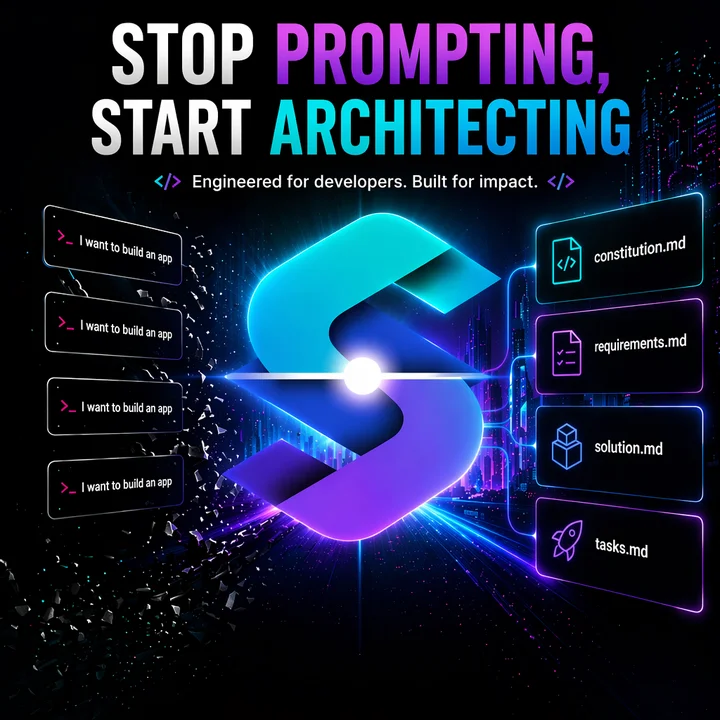
MySpec generates four core files:
Constitution: the project principles and global rulesRequirements: the features, user stories, and acceptance criteriaDesign: the architecture, data models, and technical decisionsTasks: the implementation roadmap for developers and AI agents
These files are plain Markdown. They can be reviewed, edited, committed to Git, shared with a team, or passed into an AI coding workflow. That is intentional. The spec should not live inside a black box. It should become part of the project.
The Advantage for Indie Builders
Indie builders and solo hackers have a different problem: context disappears.
You start a project on a weekend. You make progress. Then you come back two weeks later and forget why half the decisions were made. Your AI chat history is stale, your memory is incomplete, and the next session starts with too much rediscovery.
A spec bundle fixes that. It makes the project resumable.
When the requirements, design, and tasks are written down, you can return later and continue with less friction. You can also reuse patterns across projects. The first project becomes a foundation for the second.
For solo builders, that matters. Time is limited. Energy is limited. The goal is not to generate the most code. The goal is to ship the right version faster.
What the Open Beta Includes
MySpec is now in Open Beta, running from May 7, 2026 through July 7, 2026.
During the beta, users can create a project, add rough notes or attachments, go through the AI interview, and generate the core spec files. The goal is to make the jump from “I have an idea” to “I have a real technical plan” much easier.
The current beta focuses on:
- AI-guided project discovery
- Spec bundle generation
- Requirements, design, constitution, and task files
- Mermaid diagrams
- Version history for spec revisions
- Chat-based refinement of the generated spec
The roadmap includes custom spec templates, team collaboration, and IDE integrations. Those are natural next steps because the long-term goal is not only to generate specs. The goal is to make specs the operating layer for AI-assisted software development.
Why This Matters Now
AI coding is moving fast, but the workflow around AI coding is still immature.
Right now, too many people treat AI like a magic implementation box. They give it a loose idea and hope the result is close enough. That works for small experiments. It does not work reliably for products that need to grow.
As models become stronger, the value of clear instructions increases. A more capable AI can do more damage when it is pointed in the wrong direction. That is why architecture, requirements, and constraints matter more now, not less.
MySpec exists because I believe the next step in AI-assisted development is not just better prompting. It is better architecting.
Stop Prompting. Start Architecting.
The builders who win with AI will not be the ones who generate the most code per hour.
They will be the ones who can define the clearest target, preserve the most useful context, and give every human and AI contributor the same source of truth.
That is what MySpec is trying to make normal.
Start with clarity. Turn the idea into a spec. Then let the AI build against the plan.