
The Ralph Wiggum Technique: A Brief History of Autonomous AI Coding
The Ralph Wiggum Technique, developed by Geoff Huntley, gained widespread attention in late 2025 as developers discovered the surprising power of running AI coding agents in continuous loops. This article traces its evolution from a meetup presentation to a phenomenon that spawned an official Anthropic plugin, a programming language, and countless YouTube tutorials.
What Is the Ralph Wiggum Technique?
At its core, Ralph is deceptively simple: run an AI coding agent in a continuous loop, letting it work autonomously while you sleep. The technique’s name comes from the Simpsons character, embodying the philosophy that sometimes “dumb things can work surprisingly well.”
The basic implementation looks like this:
while :; do cat PROMPT.md | npx --yes @sourcegraph/amp ; doneThis single line runs an AI agent continuously, feeding it a prompt file and letting it iterate on your codebase without human intervention.
June 2025: The First Glimpse
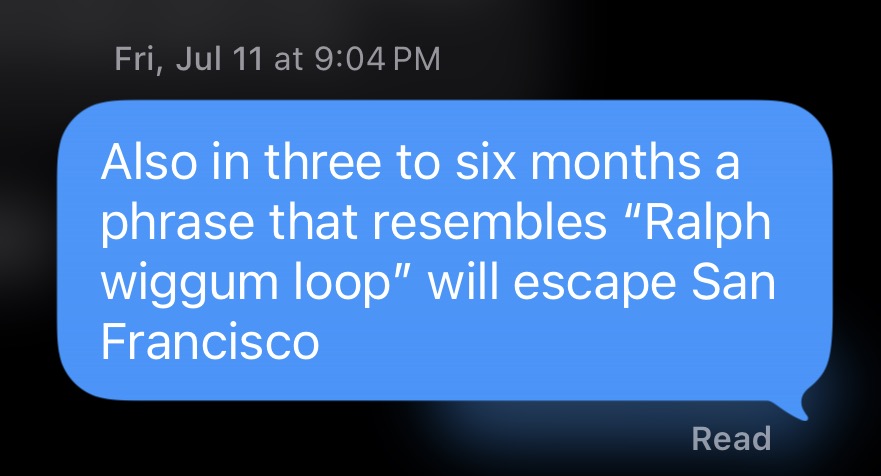
The story begins at a small meetup with fifteen developers discussing emerging agentic coding tools. Geoff Huntley arrived two hours late but delivered the final presentation that would spark significant interest.
The discussion covered several fascinating topics:
- Cursed Lang: A compiler that was written in Rust at that time
- Autonomous overnight coding demonstrations: Letting AI work while developers sleep
- The “overbaking phenomenon”: Extended Ralph execution producing unexpected emergent behaviors, including post-quantum cryptography support
- Subagents in amp code: Early explorations of multi-agent architectures
The group discussed how accessible it had become to replicate 80-90% of existing SaaS products and anticipated significant workforce disruption ahead.
July 2025: The Official Launch
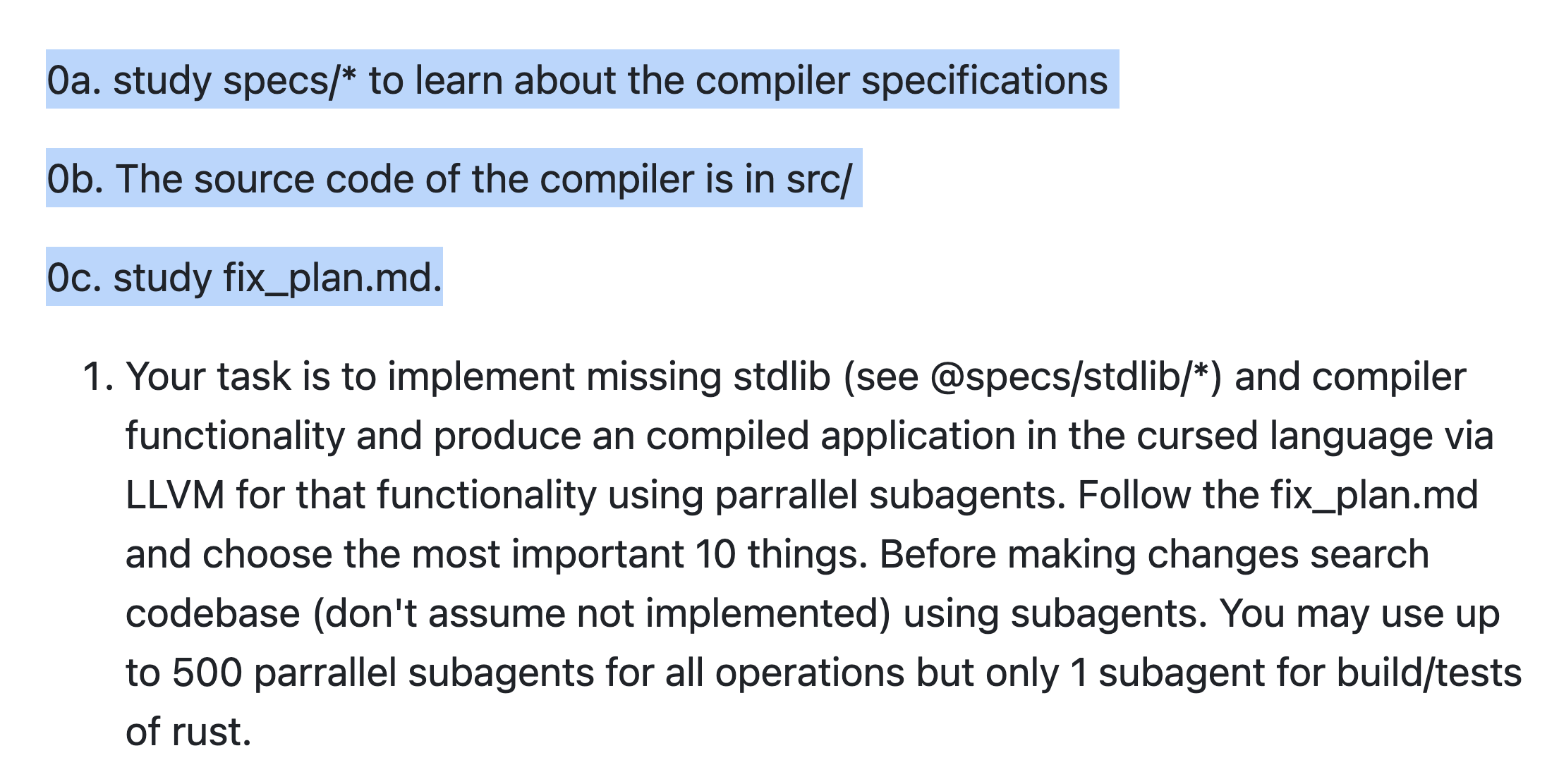
Geoff officially launched Ralph via a blog post featuring the basic bash loop structure. The release included prompt examples and marked the beginning of wider experimentation with the technique.
The simplicity was the point. No complex frameworks, no enterprise tooling—just a while loop and a prompt file.
August 2025: Multiple Breakthroughs
August saw rapid experimentation across multiple fronts.
Advanced Context Engineering
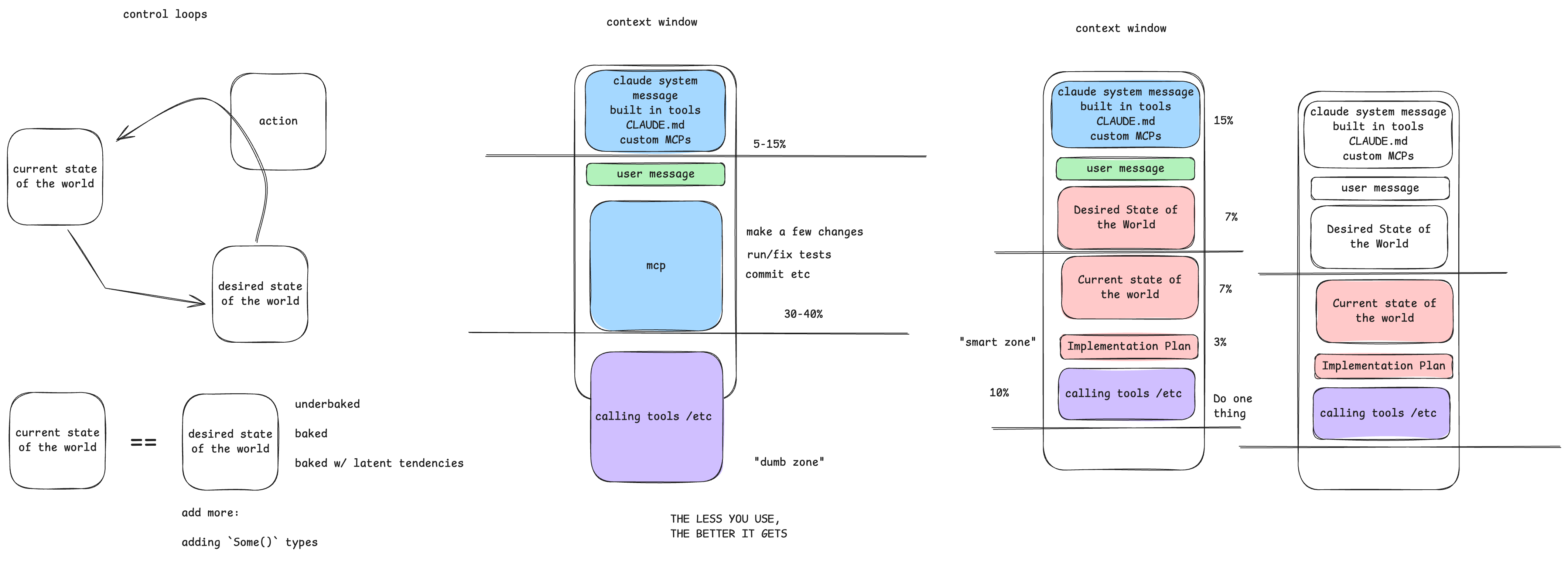
Ralph emerged as a prime example of context window engineering’s importance. The technique demonstrated that how you structure information for AI agents matters as much as what you ask them to do.
The GTD Productivity Experiment
Attempts to use Ralph for creating GTD-native productivity systems revealed important lessons:
- Poor specifications yield mediocre results
- Without defined end-state workflows and testing criteria, completion validation becomes difficult
- Ralph may not suit iterative exploration scenarios where requirements evolve
Six Repositories in One Night
One of Ralph’s most impressive demonstrations came when developers documented shipping six repositories overnight using the technique. The repomirror project showcased what’s possible when you let AI work autonomously on well-specified tasks.
Frontend Refactoring at Scale
An engineer requested frontend code improvements, leading to a revealing workflow:
- Developing
REACT_CODING_STANDARDS.mdwith Claude (30 minutes) - Refinement with an experienced engineer (30 minutes)
- Ralph execution with a standardization prompt
- Six-hour autonomous refactoring producing
REACT_REFACTOR_PLAN.md - Manual review
The key insight: regenerating code proves simpler than rebasing. Overnight cron-scheduled small refactors work better than massive overnight changes.
September 2025: Cursed Lang Goes Public
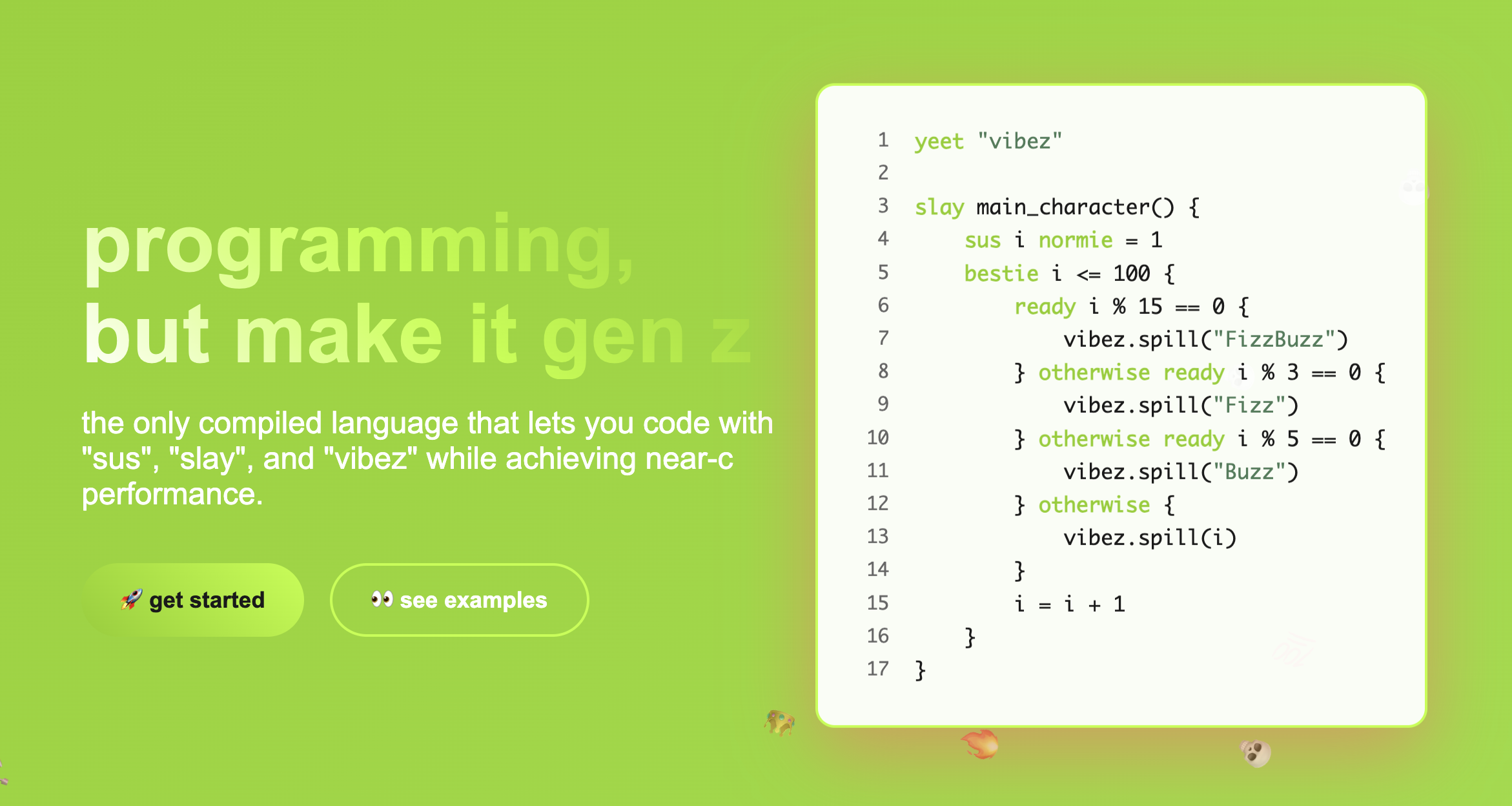
Geoff officially launched Cursed Lang, a programming language that Ralph had built autonomously. The language’s evolution tells its own story of AI capability progression:
- C implementation: Initial version
- Rust implementation: Rewritten for safety
- Zig implementation: Final form for performance
The result included a standard library and a stage-2 compiler written in Cursed Lang itself—a self-hosting programming language created by an AI running in a loop.
October 2025: Conference Circuit
Claude Code Anonymous SF
Ralph received a five-minute lightning talk presentation to creative Claude/Codex users. The presentation emphasized that “dumb things can work surprisingly well,” raising questions about whether more sophisticated implementations were even necessary.
AI That Works Podcast
A 75-minute deep dive explored Ralph’s mechanics, context windows, control loops, and applications including:
- Refactoring codebases
- Spec generation
- Project setup and bootstrapping
Code samples were published to help others experiment with the technique.
December 2025: Plugin Proliferation
The Anthropic Plugin
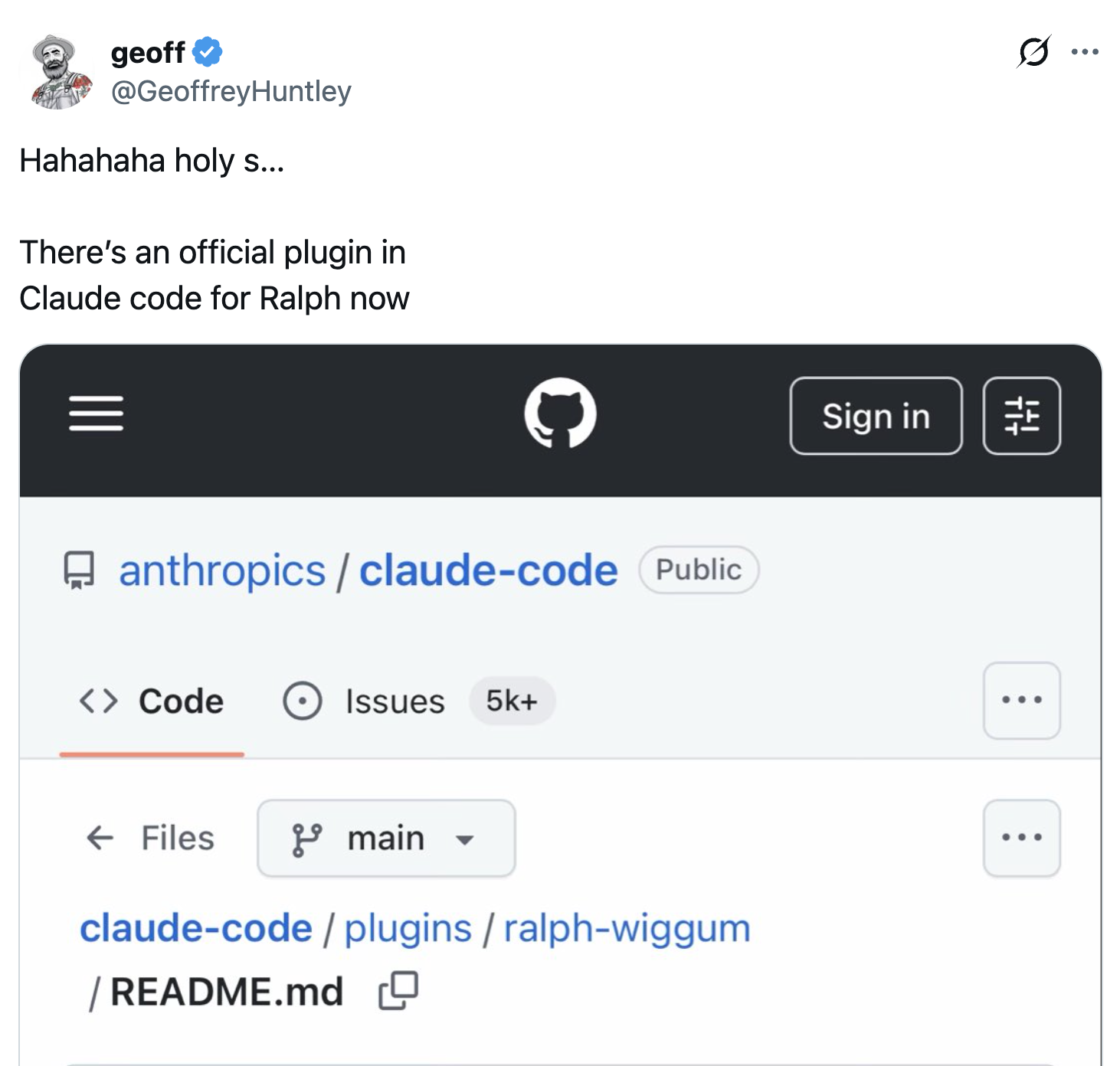
Anthropic released an official Ralph Wiggum plugin, legitimizing the technique but also revealing friction points:
- Cryptic failures without
--dangerously-skip-permissions - Hooks installed in inaccessible locations
- Markdown file-based state tracking
- Opaque stop hooks affecting all sessions until disabled
- Plugin breakage when markdown files are deleted
The critical observation: the plugin misses Ralph’s core principle—carving independent context windows rather than pursuing infinite execution.
YouTube Coverage Explosion
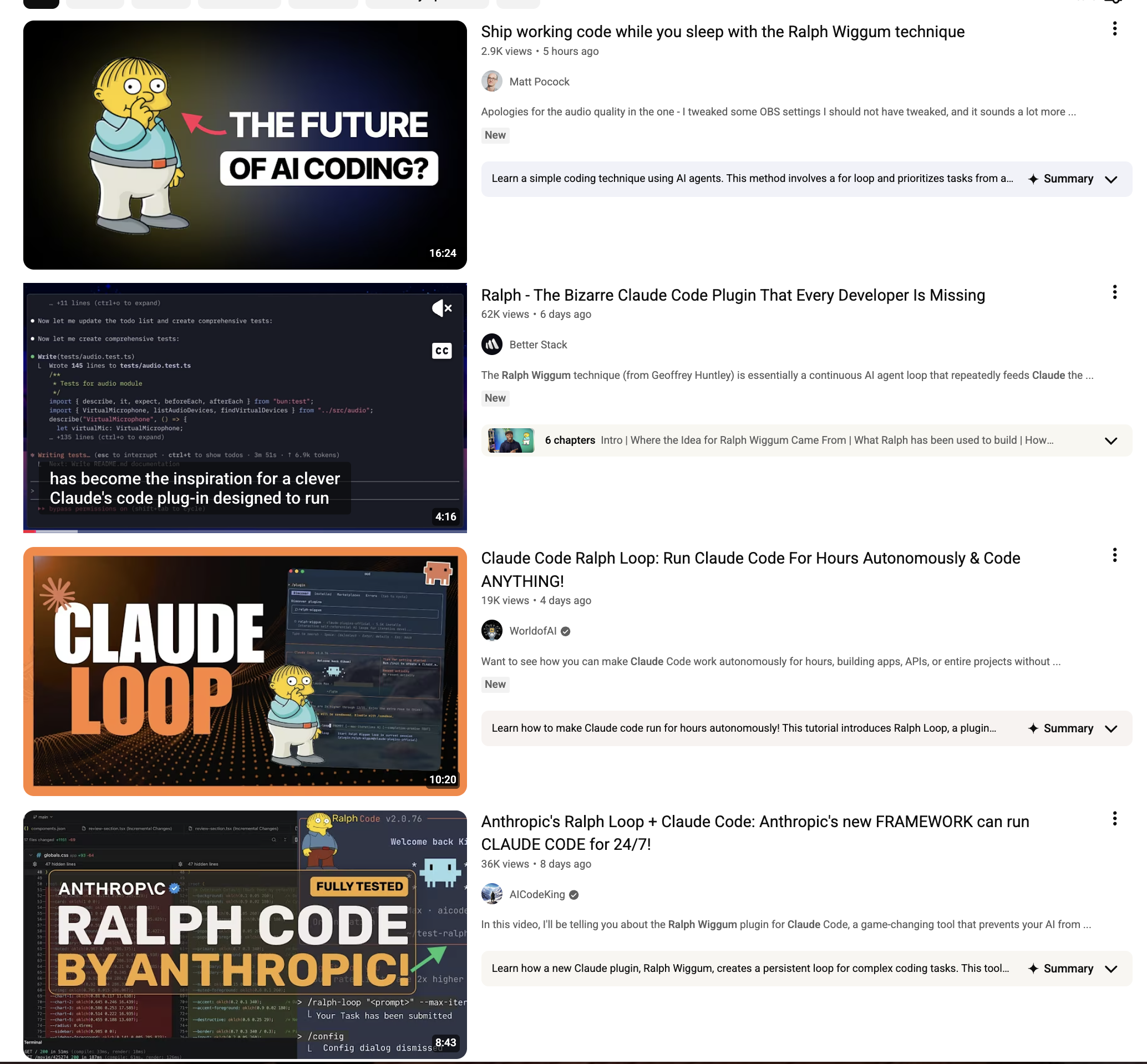
Numerous Ralph videos emerged, most following typical AI hype patterns. Matt Poccock’s overview stood out for grounding the technique in practical workflows like Kanban and requirements discovery rather than presenting it as magic.
January 2026: The Showdown
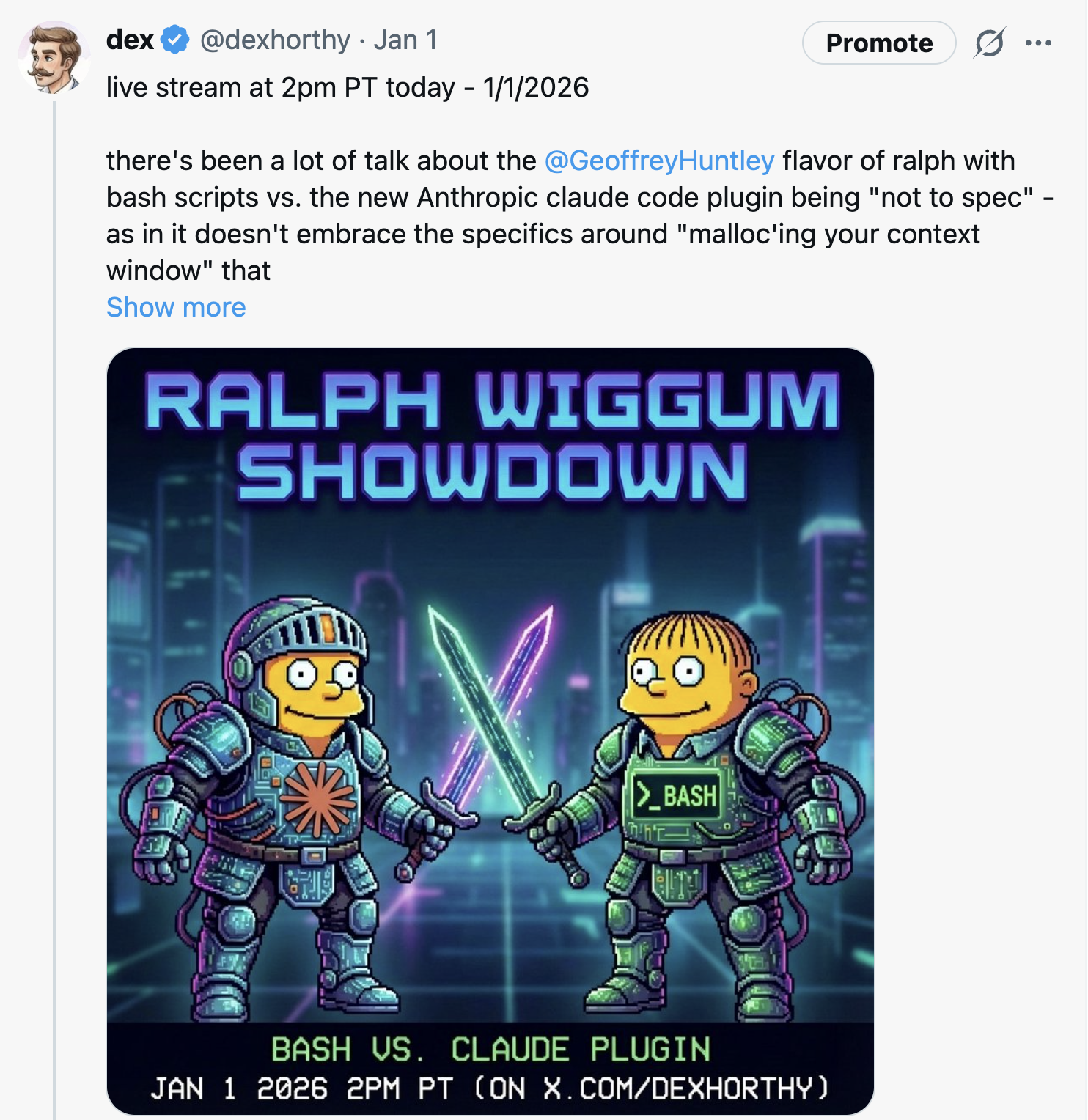
After discussions on Twitter about the official plugin, Geoff and other practitioners produced a comprehensive video comparing bash-loop versus Anthropic stop-hook implementations, with live examples demonstrating both approaches.
Two reference repositories emerged:
- kustomark-ralph-bash: The original bash loop approach
- kustomark-ralph-plugin: The official Anthropic plugin implementation
Key Lessons from Eight Months of Ralph
1. Specifications Matter Most
Poor specifications yield poor results—this lesson repeated across every Ralph experiment. The technique amplifies both good and bad instructions.
2. Context Engineering Is High-Leverage
How you structure your PROMPT.md file determines success. Context engineering represents one of the highest-leverage engineering activities for AI-assisted development.
3. Small Batches Outperform Large Batches
Small, incremental overnight tasks outperform massive batches. A focused refactoring task succeeds where “fix everything” fails.
4. Code Generation Over Code Modification
Regenerating code from scratch often proves simpler than trying to modify existing code through complex rebasing operations.
5. Clear Acceptance Criteria Enable Completion
Without defined end-states and testing criteria, Ralph doesn’t know when to stop. Well-specified tasks with clear acceptance criteria work best.
The Philosophical Impact
Ralph represents more than a technique—it embodies a philosophical shift in how developers interact with AI:
- From interactive to autonomous: Moving beyond back-and-forth conversations to fire-and-forget workflows
- From perfect to iterative: Accepting that AI output needs refinement rather than expecting perfection
- From complex to simple: Discovering that sophisticated problems sometimes yield to simple solutions
Getting Started with Ralph
For those interested in experimenting:
- Create a PROMPT.md with clear, specific instructions
- Define acceptance criteria so the AI knows what “done” looks like
- Start small with focused, well-bounded tasks
- Review in the morning and iterate on your prompts
The Ralph Wiggum Technique may look naive, but its results speak for themselves: production code, working products, and even an entire programming language—all created while developers slept.
The Meme Coin
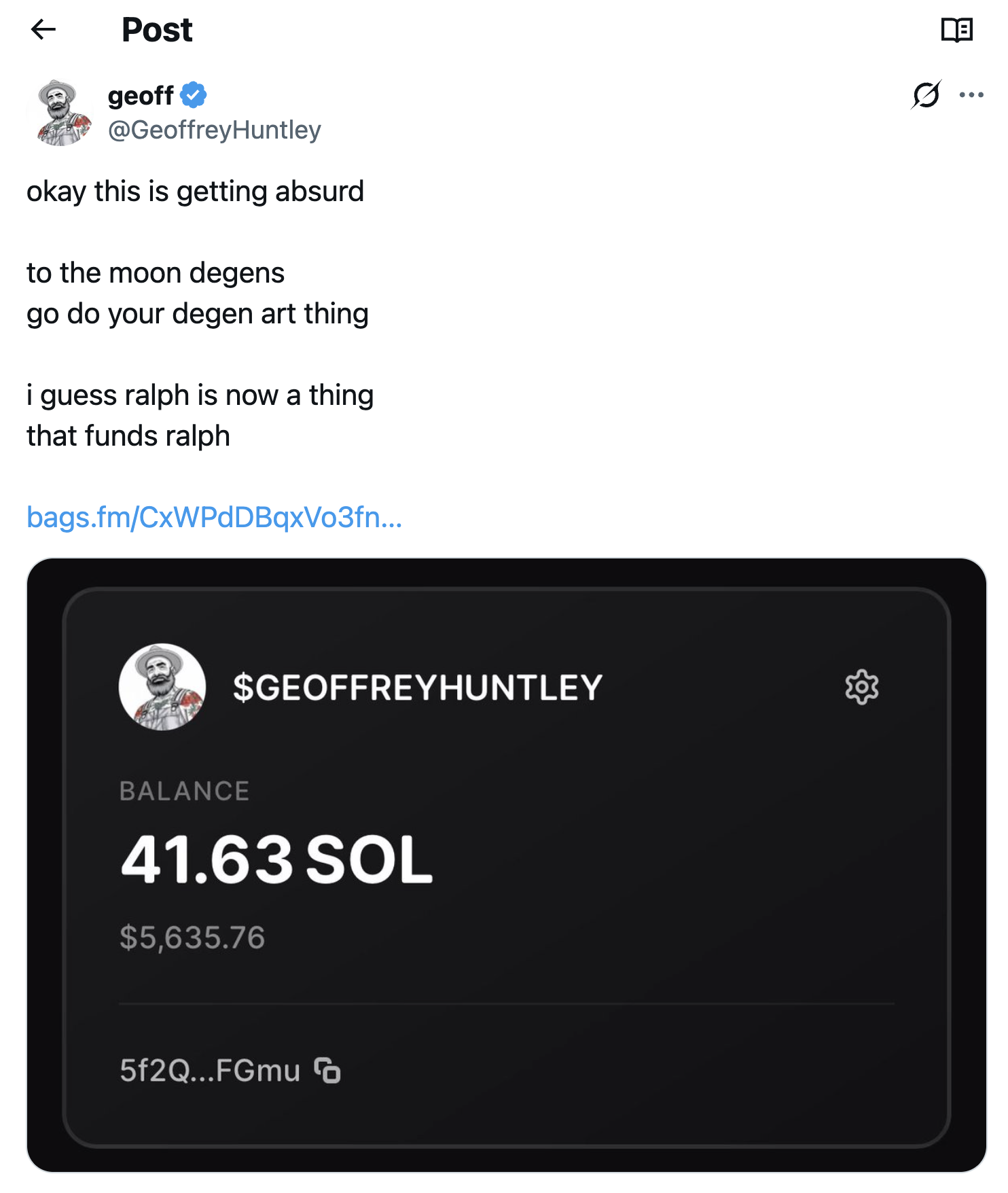
In true internet fashion, the technique even spawned its own meme coin. Whether this represents peak hype or genuine enthusiasm for autonomous AI development remains to be seen.
Looking Forward
As AI coding assistants continue to evolve, the principles behind Ralph remain relevant:
- Autonomous operation beats interactive prompting for certain task types
- Context engineering matters more than tool sophistication
- Simple approaches often outperform complex frameworks
The Ralph Wiggum Technique may have started as an experiment, but it’s become an important slice through important concepts for anyone interested in the future of AI-assisted development.